Photographer · Filmmaker
Paul Raphael
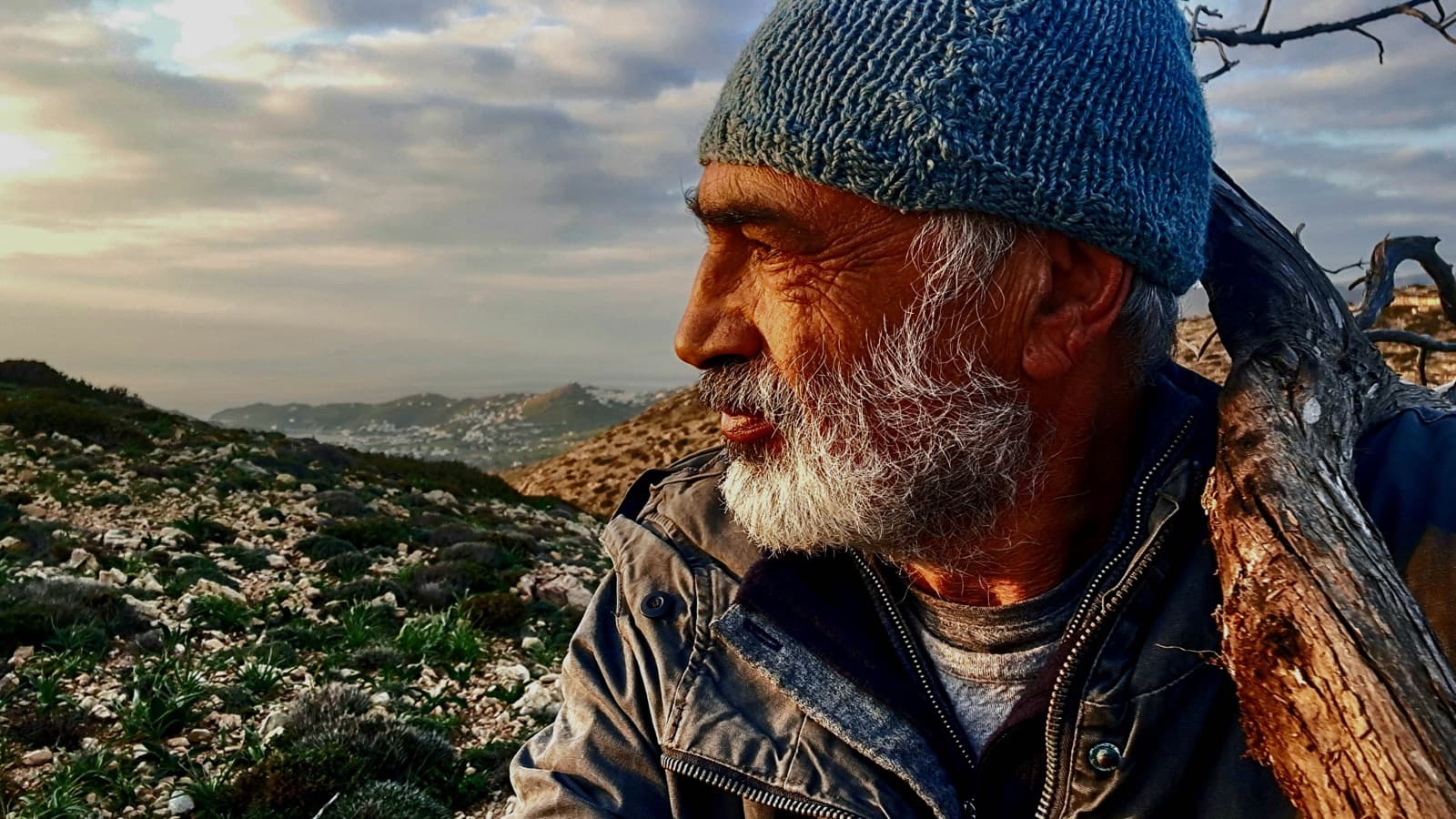
Paul Raphael is a British photographer and filmmaker based on the island of Ios, Greece. His solo exhibition “Ios: In the Light of the Gods” is presented at the Gaitis-Simossi Museum under the curatorship of Jean Blanchaert, bringing together large-format illuminated works that treat the Cycladic landscape as a field of myth, memory, and light.
International and Greek-language press—including Moments Collective, News247, the Gaitis-Simossi Museum, and iFocus—have described the project as a sustained visual dialogue with Ios: an island Raphael has known across decades, where rock, sea, and sky are encountered less as scenery than as a vocabulary shaped by classical stories and by the island’s own rhythms.
Raphael’s background in film production informs the exhibition’s sense of scale, luminosity, and pacing; the photographs read as still images charged with the same attention to atmosphere and narrative tension that cinema demands.
This text is provisional catalog copy seeded for the shop/CMS launch. It should be reviewed and replaced with Paul’s preferred wording before any public marketing use.
Origins
The Little God of Ios
Ios has been a constant in Paul Raphael’s life for many years—a family island long before it became the setting for this exhibition. That continuity informs how he photographs place: not as a tourist backdrop, but as terrain where ancient stories and present light still meet.
The Work
Nature as Subject
Raphael's photographs do not recount a place, but a time — a time when nature and the sacred were one, and every rock might have been a god. The island of Ios appears as primordial space, suspended beyond time.
Human presence is absent: humanity is only evoked, never featured. Rock, sea, sky — and above all light — shape the image. In this perceptual ambiguity lies the power of Raphael's work: nature is not background but subject — not silent, but charged with memory.
“Each of Raphael's photographs is an adventure of sight — a frozen moment in which all the images seen, the books read, the music heard, the people loved, are present.”
Jean Blanchaert, Exhibition Curator